
Improving efficiency with self-serve accounting platform connections
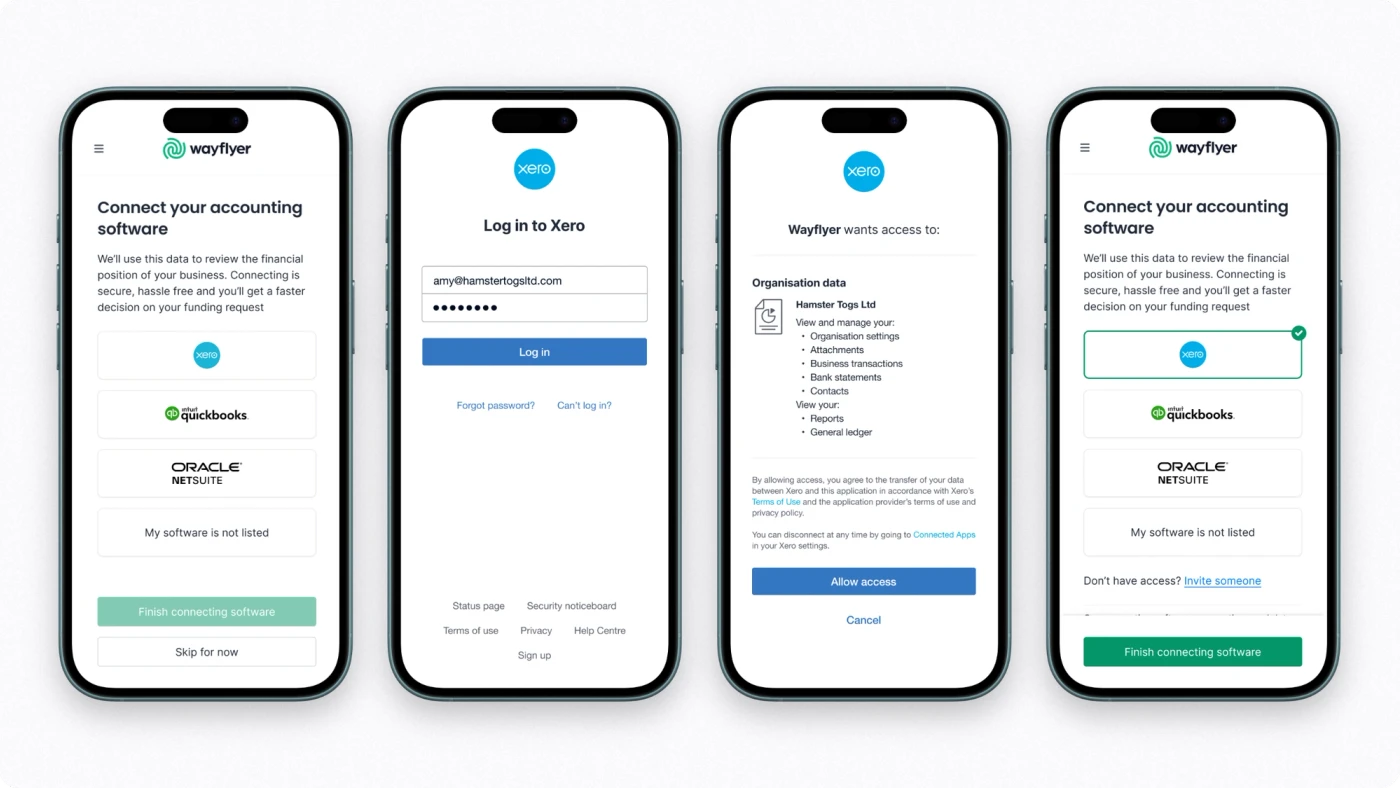
Impact

Eliminated effort for Wayflyer staff to connect accounting platforms
Introduced revenue step to tailor onboarding experience to user needs
More secure, trustworthy process that no longer seems like phishing
Story
Overview
Wayflyer offers revenue-based financing to e-commerce brands, and bases funding decisions on data customers connect, like their store, analytics and bank accounts. Larger customers also had to connect their accounting software, and that step happened entirely outside the product.
I was the sole designer on onboarding, working with a product manager and four engineers. I replaced emailed links with a secure in-app flow, and I made the case for a better first release than the quick fix on the table.
The challenge
Every connection meant staff emailing links and chasing customers
Customers needed to connect their accounting software if they were over a revenue threshold or asked for more than $250k in funding. That was about a quarter of them.
Staff had to work out who needed to connect, email each of them a link to Codat, a third-party service for accounting connections, and then chase them until they did. It was manual effort for every customer, and it all happened outside the Wayflyer app. Some customers weren't expecting the email and doubted whether the link was genuine.
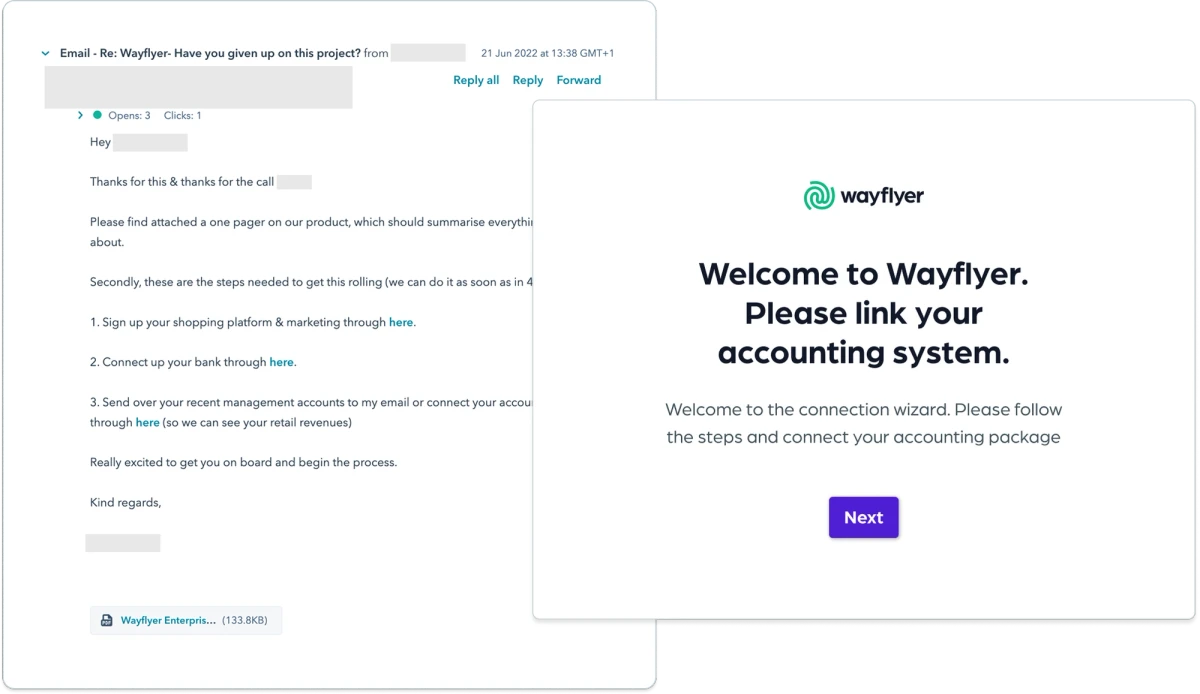
The email link went straight to a third party, causing hesitation for some founders
The quick fix would have sent everyone to a third-party site
The integrations team proposed putting the Codat link into onboarding. It was quick to build, but I asked for it to be reconsidered:
- Around three quarters of customers didn't need to connect accounting software, so most people would see a step that wasn't for them.
- Codat's screens looked a bit like Wayflyer's but behaved differently, which risked confusing people halfway through onboarding.
That left two questions to answer:
How might we bring the accounting connection in line with the rest of onboarding, without the scope getting too big?
How might we find out who needs to connect, without adding friction for everyone else?
The solution
I took three options to a stakeholder workshop
Rather than argue for one answer, I ran a workshop with the key stakeholders and laid out three options:
- Ship the Codat link as planned.
- Build a native integration for every accounting platform.
- Build native integrations only for the platforms that covered most connections.
I brought usage data so we could weigh each option on what it would actually change, and I put forward my recommendation for the group to challenge.
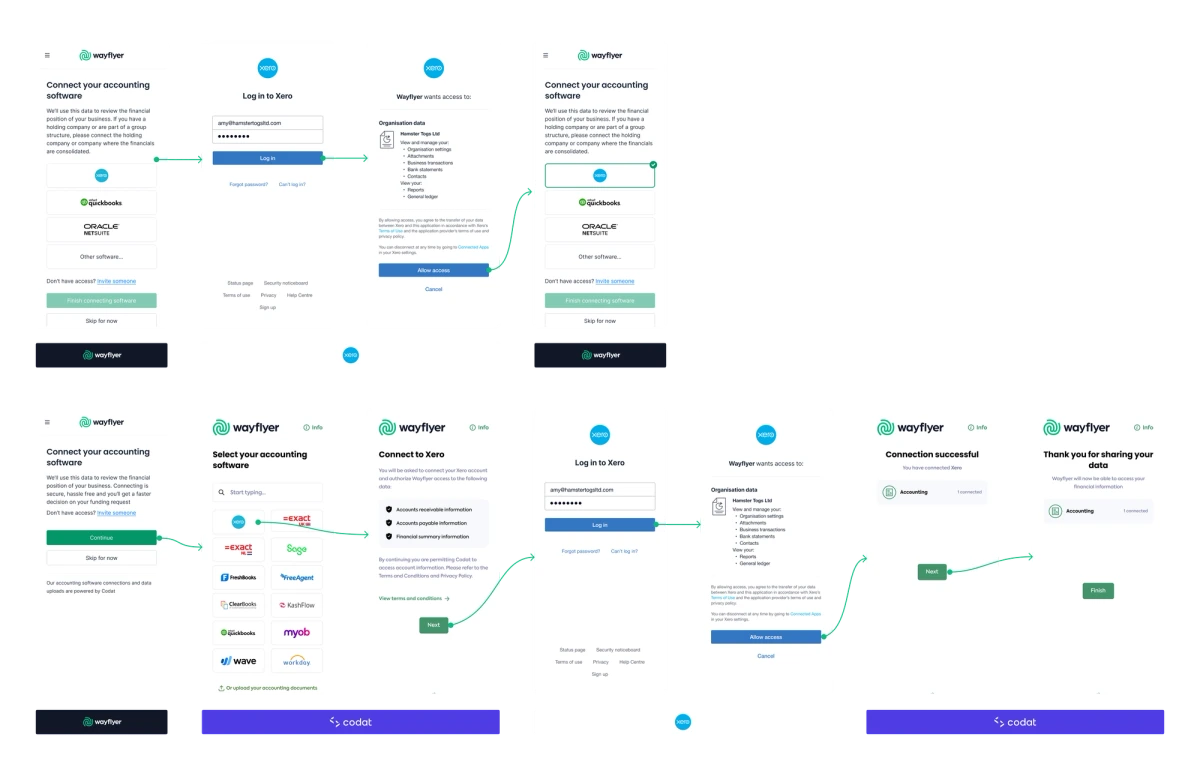
Comparing the flows for Codat API integration vs Codat Link which uses Codat's UI. Clearly presenting the different options to key stakeholders was critical in ensuring we could make decisions and tradeoffs effectively and collaboratively. This aligned the team on which direction to take
Integrating the top three platforms covered 85% of connections
Each native integration was estimated at a sprint, and there were 12 platforms, which was far too much for a first release. The data showed three of them, Xero, QuickBooks and NetSuite, covered 85% of connections.
So we built those three natively, inside onboarding, matching how customers already connected their store. Anyone on another platform got the Codat link from the same screen, and came back to Wayflyer when they'd finished.
Asking for revenue up front let most customers skip the step
To know who needed to connect, we needed each customer's revenue. Earlier interviews showed customers knew their monthly revenue well, so asking was easy. I used ranges instead of an exact figure, with large tap targets.
In return, the next screen showed an indicative funding range. My earlier research found customers would rather know what they could get than say what they wanted. The revenue step replaced a funding slider that was awkward on mobile, where Hotjar and sales calls showed people hesitating.
The roughly three quarters of customers below the thresholds skipped the accounting step entirely, and every customer got a sense of their funding early on.
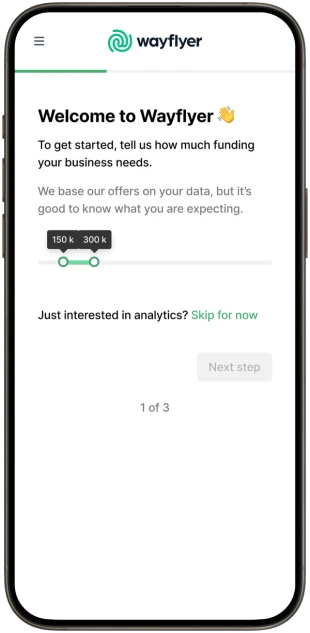
The funding slider was awkward to use on mobile and caused hesitation
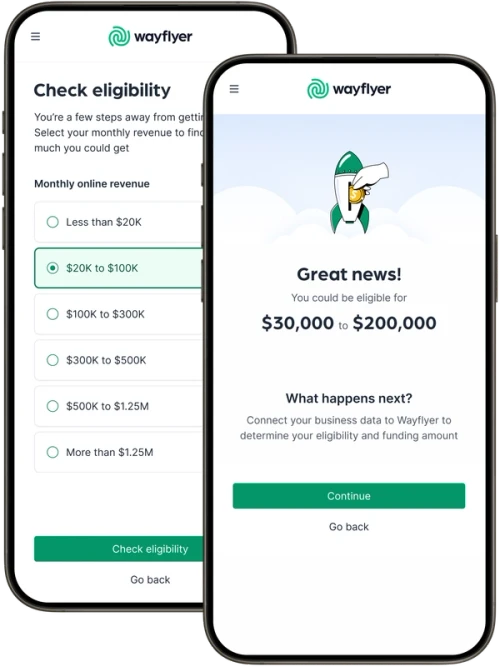
The eligibility check gave us critical filtering information and helped founders get an initial idea of how much funding they could be eligible for
The outcome
85% of accounting connections became self-serve, with no manual work from Wayflyer staff. A secure flow inside the app replaced the emailed links and the chasing, and every customer got an indicative funding range, whether they needed to connect or not.
For me, it showed how laying out trade-offs clearly can move a decision. Taking options and data to people outside my team, rather than just pushing back, built trust in design across the business.